Your fabric couch isn’t just furniture, it’s the heart of your living space, where you relax, share laughs, and make memories with family and friends. But everyday use can take its toll, leaving behind dirt, stubborn stains, and lingering odours that diminish comfort and freshness.
This guide equips you with easy, effective strategies to restore and maintain your couch, keeping it spotless, fresh-smelling, and welcoming. With the right care, your favourite spot at home can stay as inviting and comfortable as the day you brought it home.
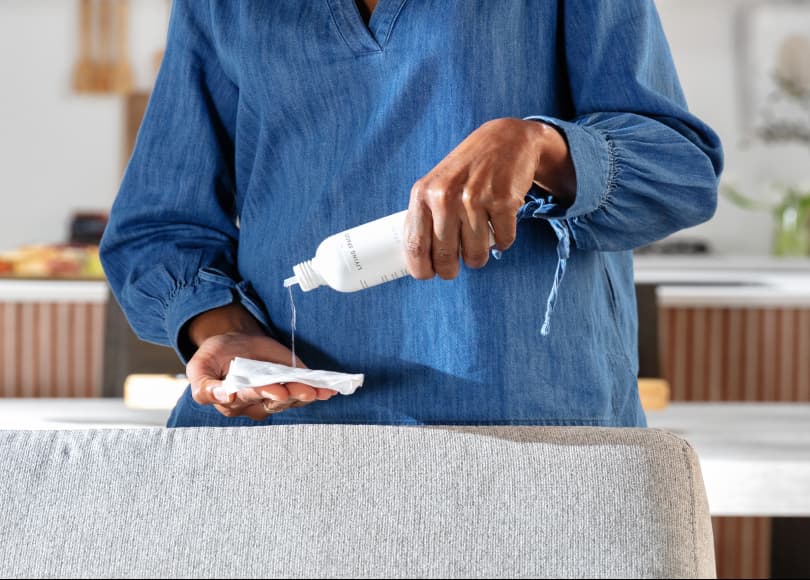
Understand your couch’s fabric type
Different fabrics have distinct needs. Here’s how to decode your couch’s label.
Identifying fabric types
Before you start cleaning, it’s crucial to identify the type of fabric your couch is made from. Usually, you can find this information on the manufacturer’s label.
Natural fibers
Natural fibres such as cotton, linen and wool can be comfortable and attractive but may require more careful cleaning. Their response to moisture, heat and cleaning products can vary, so always check the manufacturer’s care instructions and upholstery cleaning code before treating stains or applying moisture.
If you are unsure about the appropriate cleaning method, professional upholstery cleaning can help reduce the risk of shrinkage, colour change or watermarks.
Synthetics
Like polyester, microfiber, and rayon, these are easier to clean but can react poorly to certain chemicals.
Expert tip: Different upholstery fabrics require different cleaning methods. Certain kinds of fibres necessitate specific techniques. Rather than choosing a method based only on whether the fabric is natural or synthetic, check the manufacturer’s instructions and cleaning code first. Some fabrics can tolerate water-based cleaning, while others require solvent-based methods or vacuum-only care. When in doubt, professional upholstery cleaning can help determine the safest approach.
In all cases, furniture manufacturers utilize standardized upholstery cleaning codes as reference points for determining the most suitable cleaning method for individual pieces of furniture.
Key takeaways
Always check the manufacturer’s care label before cleaning your couch. Common upholstery cleaning codes include:
- W: Water-based cleaning solutions may be suitable
- S: Solvent-based cleaning may be suitable
- WS: Water- or solvent-based cleaning may be suitable
- X: Vacuuming or light brushing only
If the label is missing or unclear, avoid experimenting with cleaning products and consider professional advice.
Setting the stage: Pre-cleaning practices for your couch
Every great cleaning session begins with the proper preparation. Before deep cleaning your couch, it’s essential to address the surface-level dirt and debris. Here’s how:

Vacuuming
With the help of an upholstery attachment on your vacuum cleaner, target those hidden areas of your couch. This ensures that crumbs, pet hair, and other loose debris are effectively removed.
Brushing
Vacuuming alone may not be enough, especially if the dirt is embedded into the fabric. Using a soft-bristle brush, gently agitate the surface to dislodge any stubborn dirt particles. Remember, the emphasis is on being gentle to avoid causing any damage to the fabric.
Removable covers
If your couch has removable covers, check the manufacturer’s washing instructions before putting them in the washing machine. Follow the recommended water temperature, detergent and drying instructions, as incorrect washing or excessive heat can cause shrinkage, fading or changes to the fabric’s shape.
Expert Tip: The key to effective pre-cleaning is thoroughness. For optimal results, vacuum using overlapping strokes, ensuring you cover every inch of the fabric. Ensuring all surface dirt removal sets the stage for a successful deep-cleaning session.
Deodorizing with baking soda
Unpleasant odours can develop from everyday use, spills, food, pets and accumulated dirt. Before using any deodorising product, check the manufacturer’s care instructions and test it on an inconspicuous area.
For fabrics where dry deodorising products are permitted, a light application of baking soda may help freshen the surface:
Steps to deodorize your couch
- Apply sparingly: Lightly distribute baking soda over the affected fabric rather than covering the couch heavily.
- Leave briefly: Allow it to sit for a short period according to the fabric’s care requirements.
- Vacuum thoroughly: Use an upholstery attachment to remove all visible residue.
Expert tip: Avoid adding essential oils or other fragranced products unless the manufacturer specifically recommends them, as they may leave residue or affect the fabric.
Spot cleaning stains
Every stain tells a story, but that doesn’t mean you want it on your couch. Here’s how to tackle the most common culprits:
General stains:
Homemade solution: Start by checking the upholstery cleaning code and manufacturer’s instructions. If water-based cleaning is permitted, use a small amount of an appropriate upholstery cleaning solution and a clean, soft cloth. You can also combine distilled water, a smidgen of dish soap, and a splash of white vinegar. This trio can be surprisingly effective against everyday stains.
Golden rule: Blot the stain gently rather than rubbing it, as aggressive rubbing can spread the stain or affect the fabric’s appearance. Always test any cleaning solution on a hidden area first and allow it to dry before treating the visible area.
Red wine spills
Immediate action: Act quickly, but avoid scrubbing the stain. Gently blot the spill with a clean, absorbent cloth to remove as much liquid as possible without spreading it. Then apply a paste of Bicarbonate of soda and water over the affected area, and let it set for few minutes. Once the paste has done its job and dried, vacuum it up.
Tip: White vinegar has an enzyme that neutralizes the stain caused by the red wine and makes it easier to clean. Pour white vinegar diluted in water on the red wine stain and blot it with a clean, damp cloth.
Coffee or tea marks:
Blot fresh coffee or tea spills with a clean cloth to absorb as much liquid as possible. Avoid rubbing the area, which can spread the stain and work it deeper into the fibres. Try the “Tried and True Mix”: A mixture of liquid detergent, vinegar, and warm water has been known to combat these tannin-rich stains effectively.
Expert tip: Some stains are more stubborn than others. A touch of baking soda can make all the difference in such cases. However, it’s potent, so always do a patch test on an inconspicuous couch part before applying it to the stain. Safety first!
For water-safe upholstery, use a suitable upholstery cleaning product according to its instructions and always patch-test first. Older or stubborn stains may require professional treatment.
DIY method for deep cleaning your fabric couch at home
Before attempting a deeper clean, check the manufacturer’s instructions and upholstery cleaning code. If water-based cleaning is permitted, use a suitable upholstery cleaning solution and avoid saturating the fabric.
5 steps to achieve a fresh couch at home:
- Preparation: Vacuum the couch thoroughly using an upholstery attachment to remove loose dirt, crumbs and pet hair.
- Patch test: Test your chosen cleaning solution on a hidden area and allow it to dry before continuing.
- Apply sparingly: Use a small amount of the appropriate solution and work in manageable sections without soaking the fabric.
- Remove residue: Follow the product instructions for removing excess moisture or cleaning solution.
- Dry thoroughly: Allow the couch to dry completely with good airflow before using it again.
Pro Tips: Always do a patch test in an inconspicuous couch area before applying any cleaning solution to ensure the fabric doesn’t react adversely. Avoid cleaning in a way that leaves the upholstery excessively wet, and never use a product simply because it is considered suitable for another type of fabric or surface. After cleaning, provide good airflow to help the upholstery dry thoroughly. Avoid excessive direct sunlight if the manufacturer’s instructions warn against exposure, as some fabrics can fade.
Maintaining your couch
Proactive Care is Key: As the saying goes, “A stitch in time saves nine.” By taking preventive measures, you can ensure your couch remains pristine for years.
Fabric protection
A suitable fabric protector may help some upholstery resist everyday spills and make future cleaning easier. However, not every fabric is compatible with the same protective treatment.
Always check the manufacturer’s recommendations and choose a product specifically designed for your upholstery. If the couch has previously been treated, follow the product instructions for when and how it should be reapplied.
Expert tip: After thoroughly cleaning your couch, it’s an excellent practice to reapply the fabric protector. This ensures the protective barrier remains intact, ready to defend against future spills and stains.
Rotation
Even Usage: Just like rotating car tires to ensure even wear, the same principle applies to your couch cushions. By regularly flipping and rotating removable cushions, you distribute wear and tear evenly, preventing certain areas from looking more worn out than others.
Sunlight
Occasional exposure to sunlight can be beneficial for your couch. The sun’s rays naturally disinfect, helping eliminate bacteria and freshen the fabric. However, it’s essential to keep your couch away from prolonged, intense direct sunlight where possible. Regular exposure can cause some upholstery fabrics and colours to fade over time.
If you need to dry upholstery after cleaning, prioritise good ventilation and airflow rather than relying on direct sunlight.
Slipcovers
Check out the options for having a slipcover on your couch. There are different types and colours, and they are easy to take off and regularly wash. By only purchasing a new slipcover, you could have the look of an entirely new sofa in a different colour.
Knowing when to call the pros
DIY cleaning can work for some upholstery, but professional cleaning may be appropriate when the fabric is delicate, heavily soiled or affected by stubborn stains.Here are specific scenarios where you should consider calling in the experts:
Dry cleaning:
The manufacturer’s label is one of the most important references when deciding how to clean your couch. If the upholstery is marked X, it generally indicates that only vacuuming or light brushing is recommended. Do not apply water or cleaning solvents unless the manufacturer specifically permits them.
Expert tip: If the label is missing, unclear or the fabric is particularly delicate, professional advice can help you avoid using an unsuitable cleaning method.
Deep upholstery cleaning:
Pet owners and parents: Homes with pets or children may experience more frequent spills, stains, pet hair and general wear. Regular vacuuming and prompt spot cleaning can help maintain the upholstery, while professional cleaning can be considered when the fabric becomes noticeably soiled or requires deeper treatment.
Regular deep cleaning: Even without children or pets, everyday use can lead to accumulated dirt and odours. The appropriate professional cleaning frequency depends on the upholstery fabric, level of use, household conditions and manufacturer’s recommendations rather than a fixed schedule.
Expert tips: Stubborn stains, pet accidents and delicate fabrics may require specialised treatment. Always check the fabric’s cleaning requirements before attempting DIY treatment.
In conclusion
Your fabric couch can stay comfortable and well maintained with regular vacuuming, prompt attention to spills and cleaning methods suited to the upholstery. Always check the manufacturer’s care instructions before using water, cleaning products or DIY treatments.
For heavily soiled upholstery, stubborn stains or fabrics that require specialist care, professional upholstery cleaning can provide a more suitable approach.
Book now and let us return the freshness to your living space!